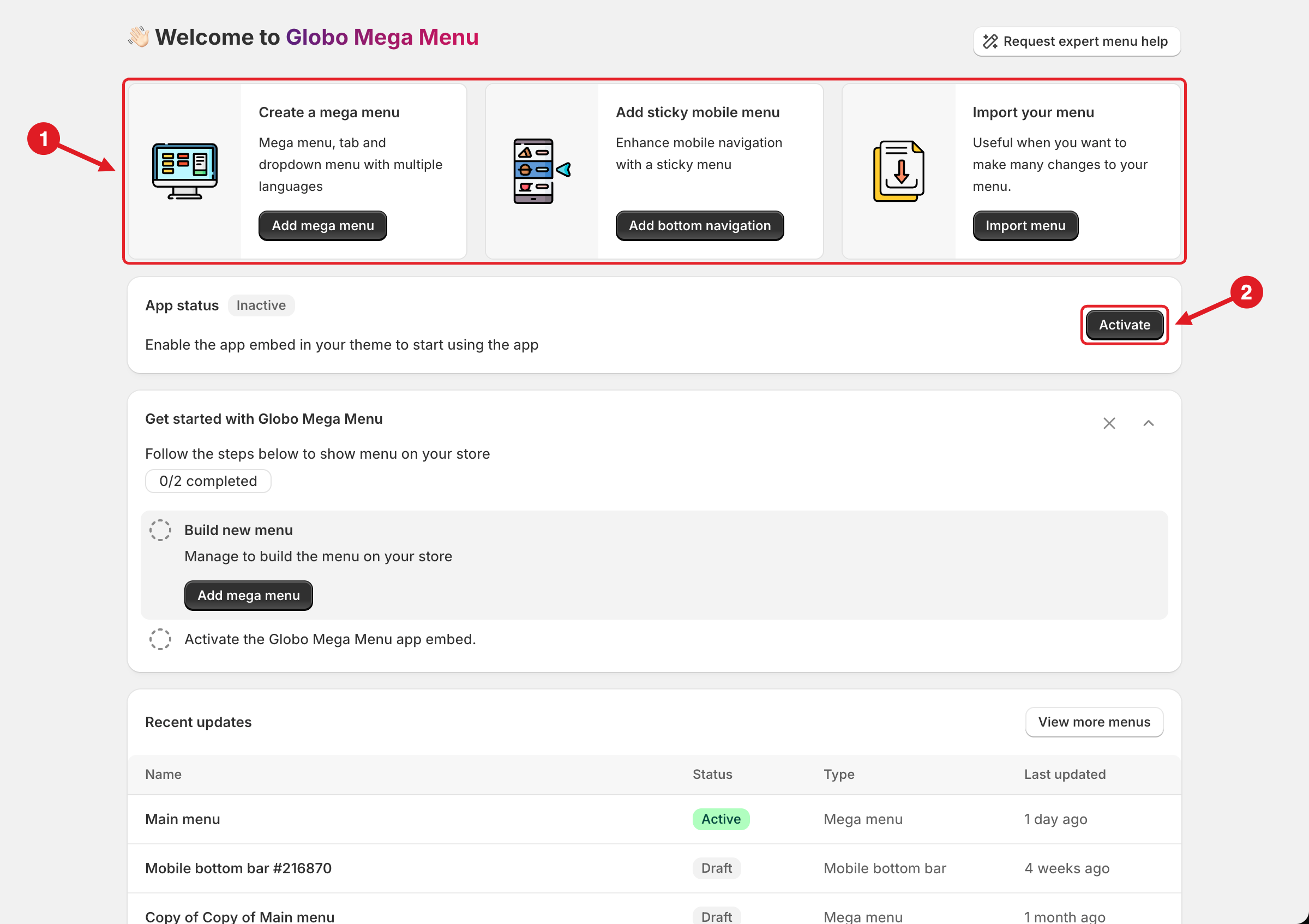
# Getting started

## 📘 Introduction to Globo Mega Menu

**Globo Mega Menu** is a powerful tool that helps merchants create advanced, customizable navigation menus for Shopify stores, from simple dropdowns to rich mega menus with images, collections, blog links, and more.

Whether you're running a fashion store, electronics brand, or home decor shop, Globo Mega Menu gives you full control over how your customers explore your catalog.

### 🧭 Two Types of Menu

Globo Mega Menu offers **two flexible menu types** to match different navigation needs and store layouts:

#### 1. Mega Menu

This is a large, multi-column dropdown menu that can display:

* Product categories (collections)
* Featured products or images
* Blog posts and article links
* Custom content blocks

It’s ideal for desktop users and gives a clear overview of your store’s offerings in a structured, visual way.

#### 2. Bottom-bar Menu

Designed mainly for **mobile-first experiences**, this menu appears at the **bottom of the screen** and provides quick-access buttons to key areas like Home, Search, Cart, Account, etc.

You can fully customize the icons, labels, and destinations for each item in the bottom bar.

### 🎯 Multi Menu — Pre-build Menus for Seasonal Campaigns

With the **Multi Menu** feature, you can **create and manage multiple versions of your store’s menu**, making it easy to switch between them for special campaigns or events.

#### Example Use Cases:

* 🥂 **New Year’s Menu** — Highlight seasonal collections and special offers
* 🛍 **Black Friday - Cyber Monday Menu** — Focus on top deals, flash sales, and most-wanted items
* 🎄 **Christmas Menu** — Showcase gift guides, best sellers, or limited-time bundles

#### Key Benefits:

* **Pre-build menus in advance** and publish them when the time is right
* Quickly **switch menus without rebuilding from scratch**
* Run **A/B tests** with different menu layouts for different events or customer segments

### 🌍 Multi-language Support

If you serve customers in multiple regions, Globo Mega Menu offers **built-in multi-language support**.

* Automatically detects and syncs with your **Shopify Markets** or **translation apps** (like **Langify**, **Weglot**, **Transcy**, etc.)
* Display menu items in the appropriate language based on your customer’s locale
* Fully compatible with **Shopify's native multi-language setup**

You can customize each menu item in different languages to ensure a smooth and consistent experience for your global audience.

### 🔧 How to Get Started

#### 🛠️ Step 1: Create a new mega menu

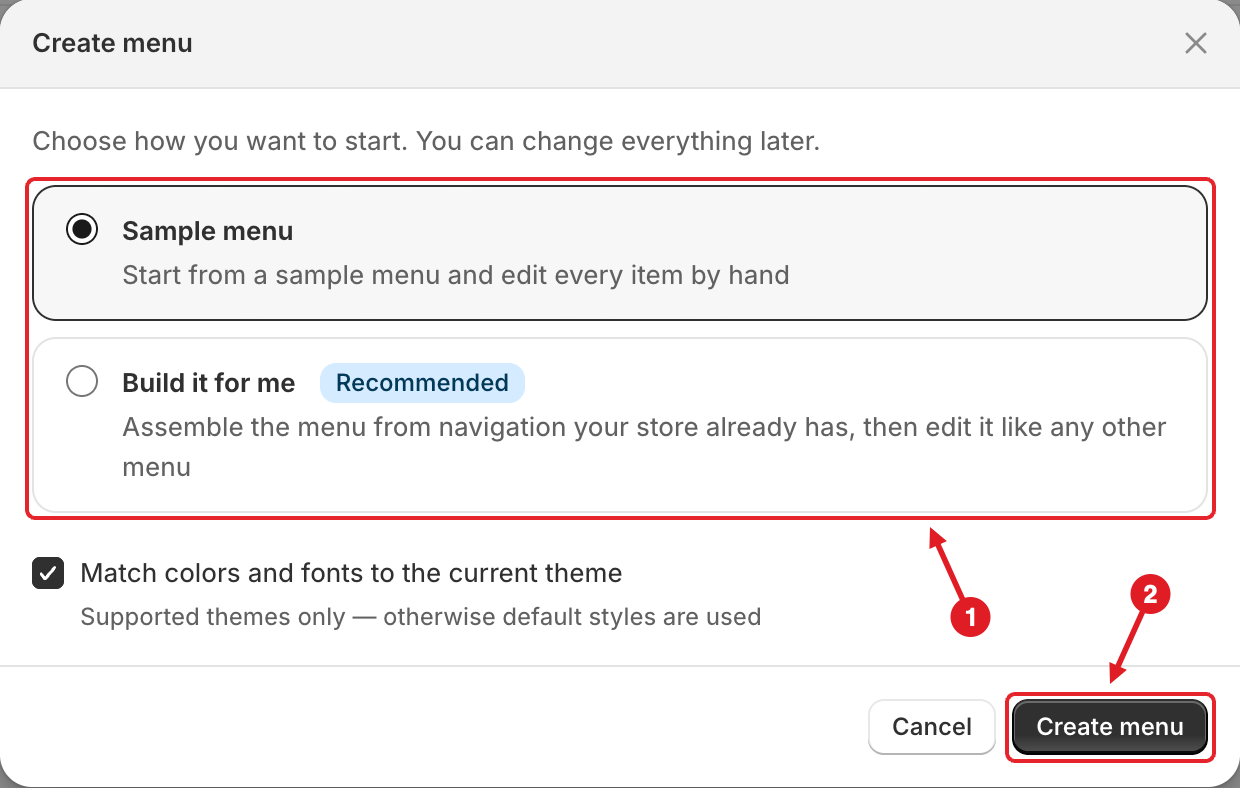
1. Open the **Globo Mega Menu** app.
2. Click **Add Menu**.
3. Set a **menu title**.
4. Choose a **menu type**:
   * Mega Menu
   * Tab Menu
   * Tree Menu
   * Simple Dropdown
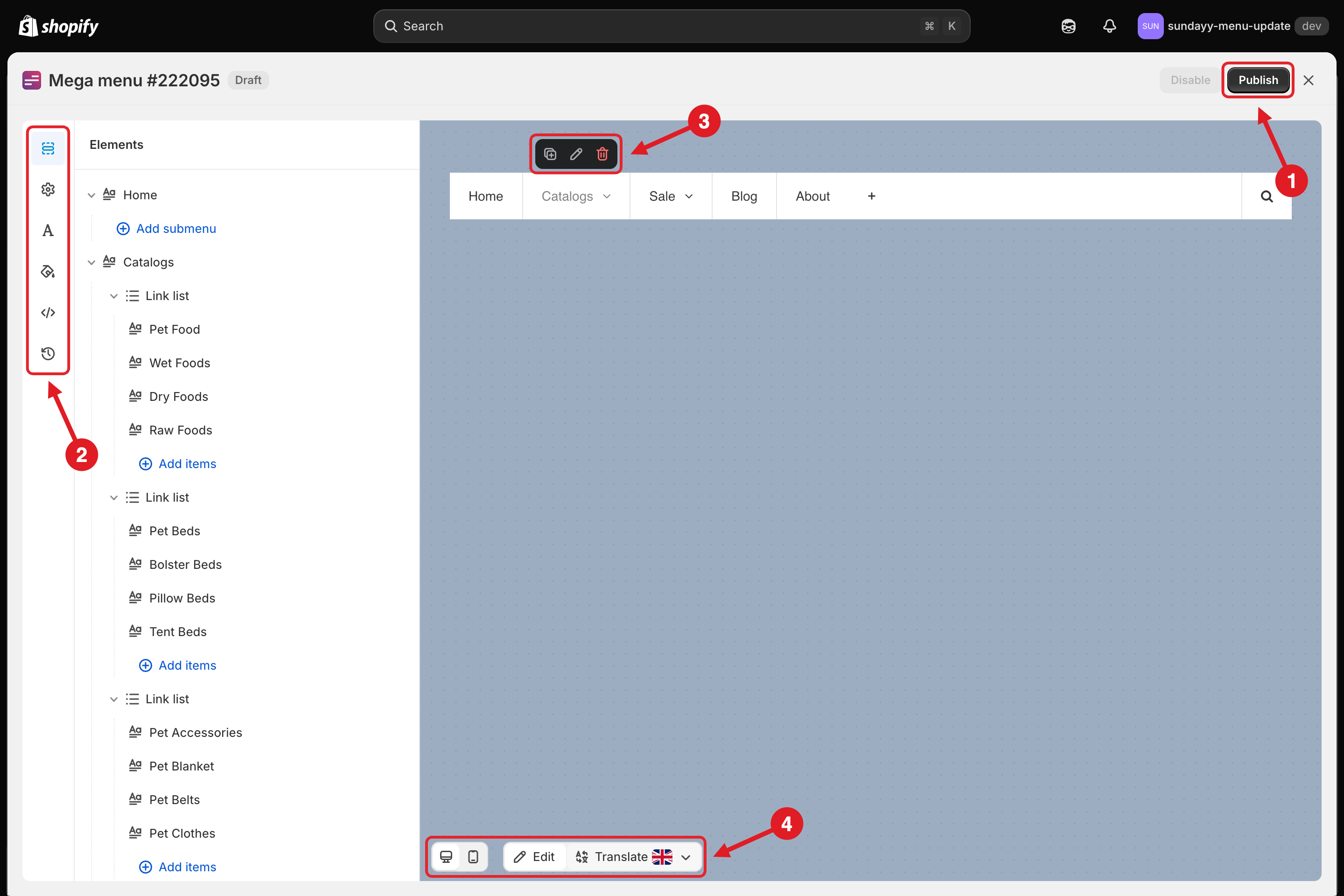
5. Add **menu items** by clicking **+ Add Item**.

You can link each item to a Shopify collection, product, page, or custom URL.

#### 🎨 Step 2: Style your menu (Optional)

Customize fonts, colors, and layout in the **Design** tab to match your store’s look.

#### 🧩 Step 3: Publish this new menu to your theme

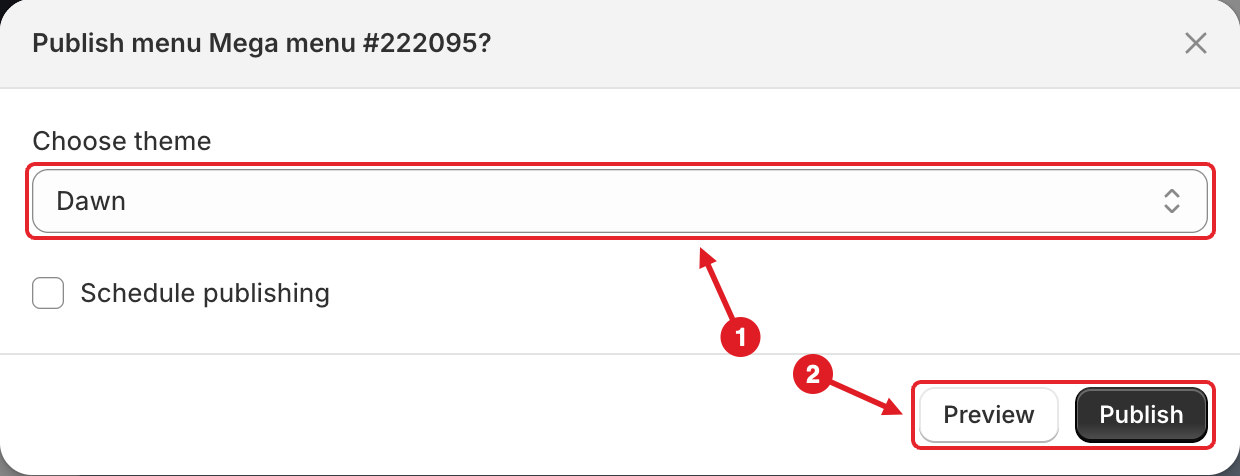
1. Click the **Publish** button located in the top right corner.​
2. In the popup window, select the theme where you want to publish the menu.​
3. Click the **Publish** button to proceed.

#### 🧭 Step 4: Enable the App Embed

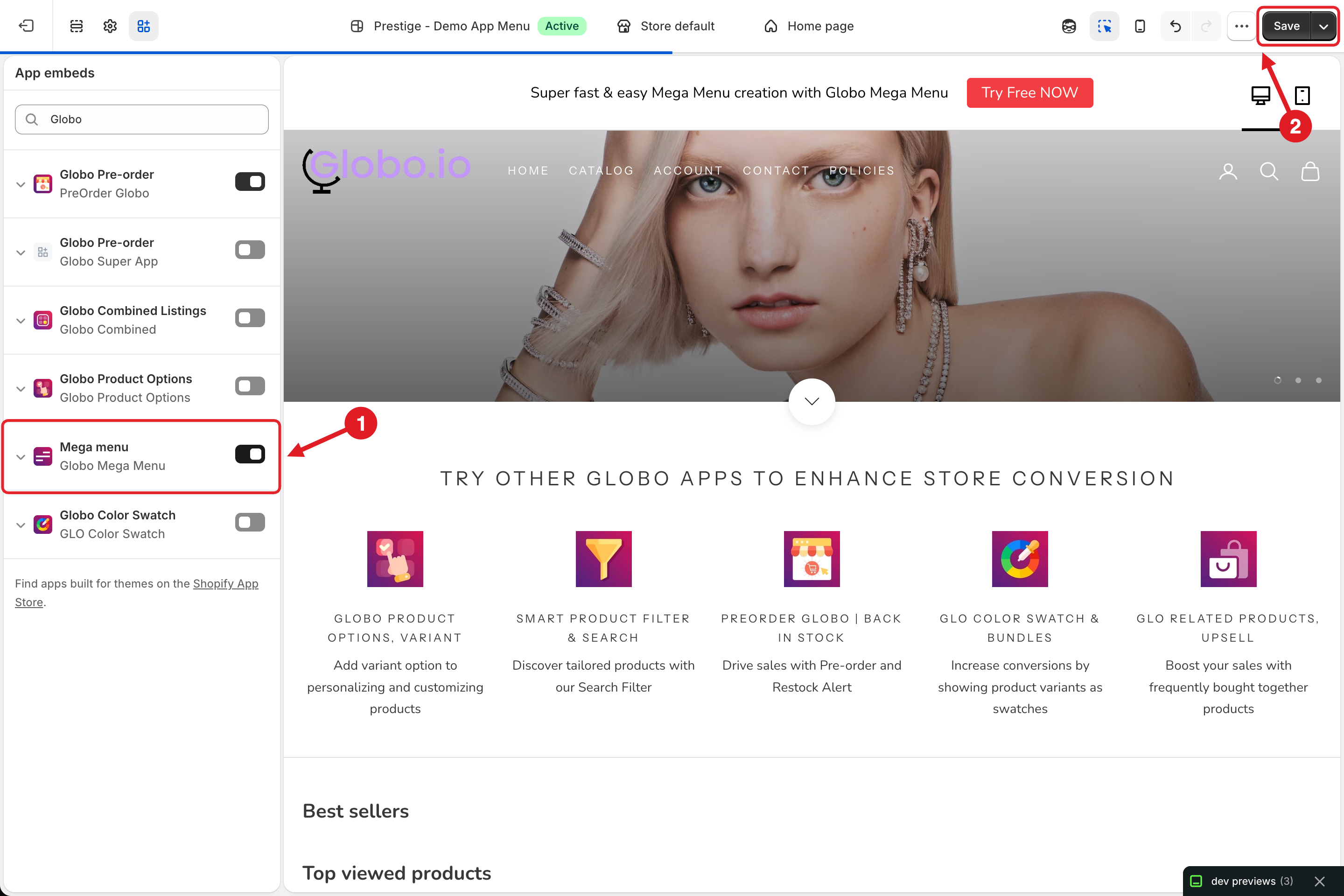
1. In your Shopify admin, go to **Online Store > Themes**.
2. Click **Customize** on your live theme.
3. Go to **App Embeds** (left sidebar).
4. Toggle **Globo Mega Menu** ON.
5. Click **Save**.

> 📌 The app won’t work on your storefront until this step is done.

### 🎉 That’s It!

Your new mega menu is now live! You can always return to the app to edit or manage your menus.

#### 💬 Need help?

Email us at **📧 <hi@globosoftware.net>** - we’re happy to assist!

***


---

# Agent Instructions: Querying This Documentation

If you need additional information that is not directly available in this page, you can query the documentation dynamically by asking a question.

Perform an HTTP GET request on the current page URL with the `ask` query parameter:

```
GET https://docs.globo.io/mega-menu/getting-started.md?ask=<question>
```

The question should be specific, self-contained, and written in natural language.
The response will contain a direct answer to the question and relevant excerpts and sources from the documentation.

Use this mechanism when the answer is not explicitly present in the current page, you need clarification or additional context, or you want to retrieve related documentation sections.